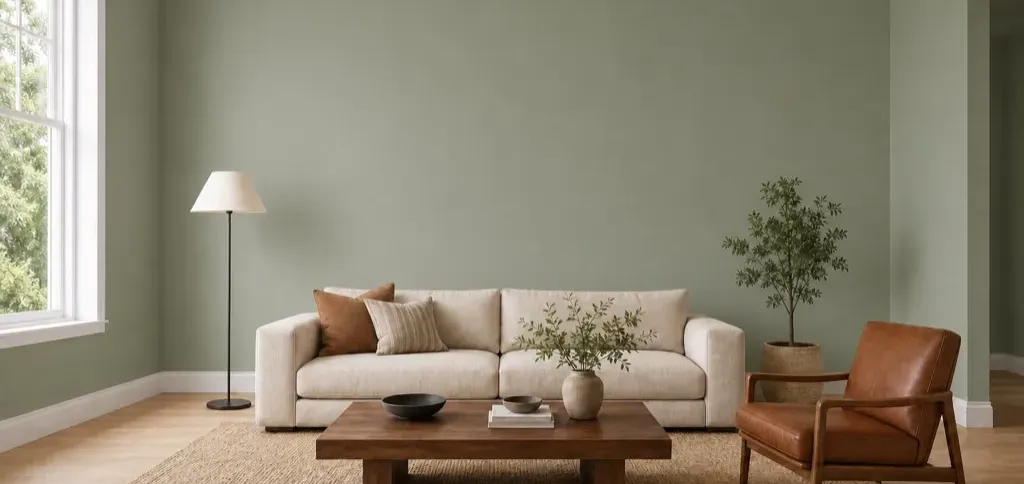
What is the safest way to decorate a rental apartment?
The safest way is to separate what you can try from what you can undo. Look first, test on a photo, and spend money only on changes you could reverse before move-out.
- Photograph the room before you change anything. This doubles as your move-in record and as the starting image for any AI test.
- Read the lease and ask the landlord. Paint, nails, wall anchors, light fixtures and flooring are the usual sticking points.
- Test looks on the photo. Try furniture, layouts and styles digitally, so mistakes cost nothing.
- Buy only reversible changes. Pick things that leave the walls, floors and fixtures exactly as you found them.
The rest of this guide walks through each step, including what AI can and cannot tell you.
Why photograph the room before you decorate?
A set of dated photos protects you and gives AI a clean baseline. Take wide shots of each wall, the floors, the ceiling and any existing marks, scuffs or holes, along with close-ups of anything already damaged.
Keep the photos somewhere you will find them at move-out. If a dispute about the condition of the unit ever comes up, a record from day one is far more useful than your memory.
The same photos work as input for a redesign. Straight-on, well-lit, wide shots give the best results, and our guide to photographing a room for an AI redesign covers angles and lighting in detail.
Do this before you unpack. Once boxes, furniture and clutter are in the frame, you lose the clean record and the clean AI input.
What should I check in my lease before decorating?
Check what the lease says about alterations, painting, wall damage, fixtures and flooring, then ask the landlord about anything unclear. Leases differ widely, and some allow small changes that others forbid.
Questions worth asking, ideally in writing so you have a record:
- Can I paint, and do I need to repaint to the original colour when I leave?
- Are small nail holes or picture hooks acceptable?
- May I change a light fixture, cabinet hardware or a showerhead if I keep the originals and reinstall them?
- Are there rules about floor coverings, such as rugs on hardwood?
- Is there an approved list of products, for example removable wallpaper?
On deposits: the summary of a Colorado bill on the state legislature's site says that under current law, a landlord may not retain a security deposit to cover normal wear and tear, and that the move-in or move-out walk-through is meant to identify in writing damage beyond normal wear and tear (as of November 2026, per the Colorado General Assembly). What counts as normal wear and tear differs by state and country, and so do deadlines and penalties. This is not legal advice. Check your own local rules and lease.
Which decorating changes are reversible in a rental?
Changes that sit on top of the space and come off cleanly are reversible. Changes that alter the walls, floors or fixtures usually are not. This table is a rule of thumb, and your lease has the final word.
| Change | Usually reversible? | What to watch |
|---|---|---|
| Rugs | Yes | Use a pad that is safe for your floor type; some backings can mark floors. |
| Lamps and lighting | Yes | Plug-in lamps and bulb swaps leave no trace. Hardwired fixtures need permission. |
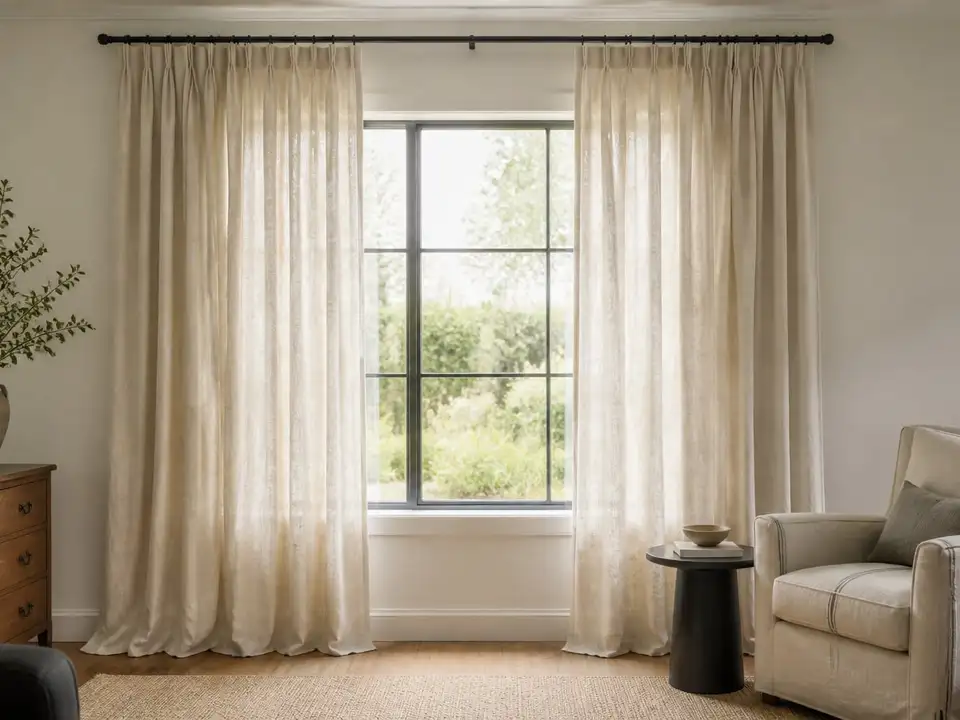
| Curtains on tension rods | Yes | Tension rods avoid drilling, but check weight limits. |
| Curtains on drilled brackets | No | Screw holes need approval. |
| Art with removable hooks | Mostly | Adhesive hooks can still lift paint if removed carelessly. Follow the product's removal steps. |
| Furniture layout | Yes | Use felt pads to protect floors when moving pieces. |
| Peel-and-stick wallpaper or tiles | Sometimes | Can pull paint or finish from some surfaces. Test a hidden patch, and ask first. |
| Painting | Not without repainting | Often needs written permission, and may need repainting when you leave. |
| Drilling and wall anchors | No | Leaves holes beyond a small nail hole. Ask first. |
| Flooring changes | No | Usually landlord territory, even if the old floor is kept underneath. |
If something falls in the Sometimes or No rows, you are asking permission, not just buying.
What can AI show a renter before they spend money?
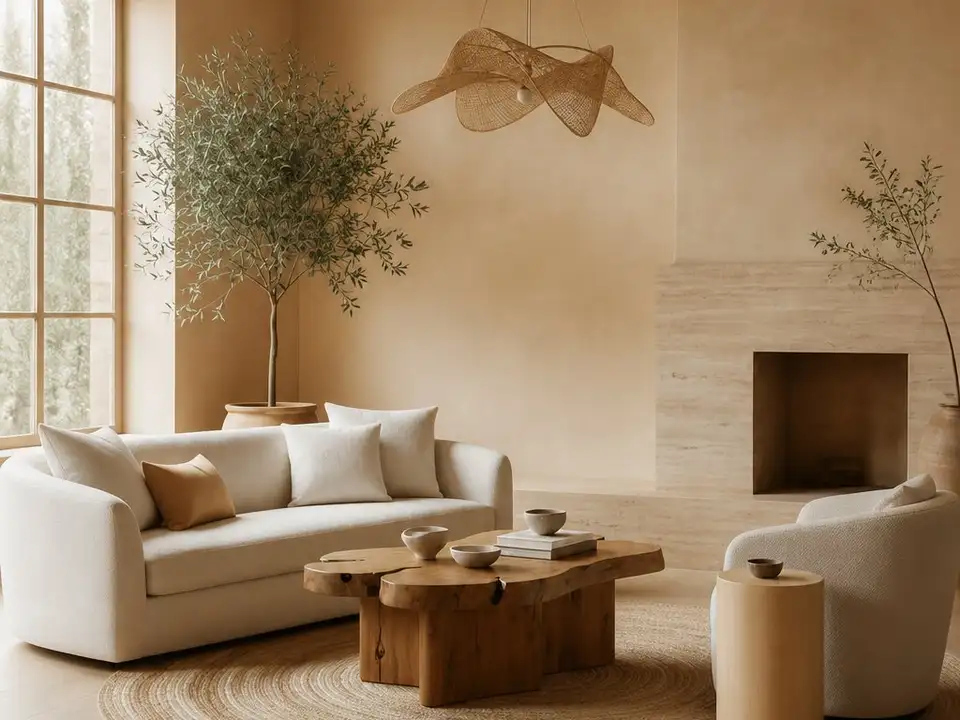
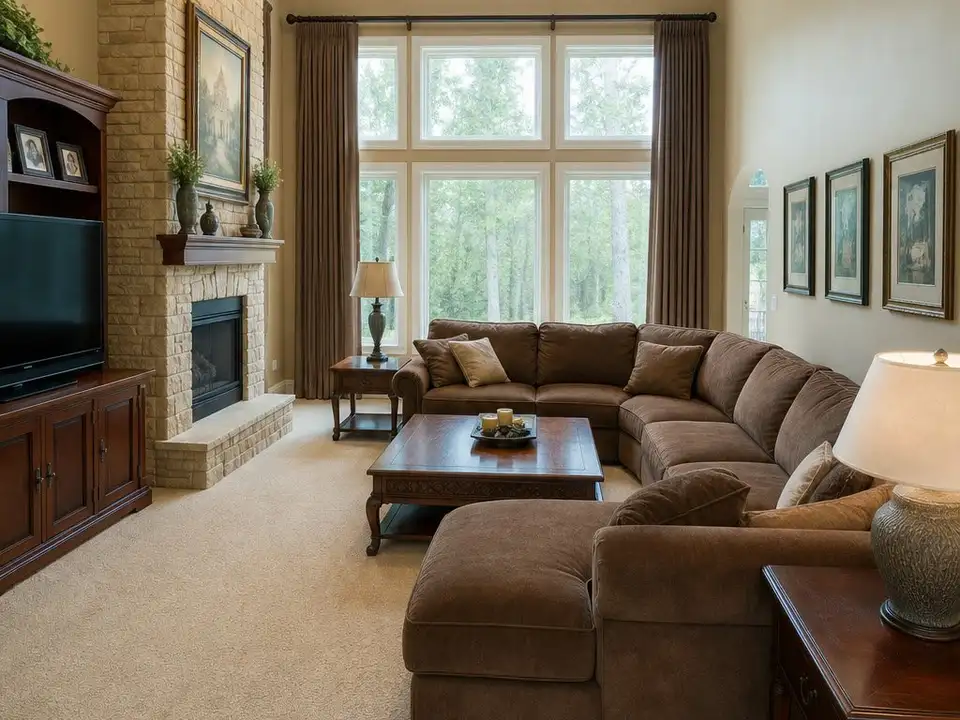
AI can show how a room could look with different furniture, layouts, styles and colour moods, using your own photo. That lets you rule out bad ideas before you buy a sofa or ask for permission to paint.
Revamp AI is a phone app where you photograph a room, pick a style and get a redesigned version. It is built to keep the room's structure (walls, windows, doors, layout) while changing style, furniture and finishes. There are more than 80 looks to try, such as Japandi, Scandinavian, mid-century, industrial, coastal, boho, farmhouse and minimalist. You can read more about how AI room redesign works.
For renters the useful part is the comparison. Run a few styles on the same photo and see which one suits your existing floors, windows and fixed features, since those are the parts you cannot change.
There is also Room Doctor, which reads your photo, names what is holding the room back, shows where in the photo, and suggests fixes to try tonight with what you already own. For rentals, that is a natural fit, because the fixes are things you already have.
A free trial lets you test it on your own room before you decide to subscribe.
What can't AI tell me about decorating a rental?
AI cannot tell you whether your landlord will approve a change, what a paint colour will look like in your actual light, or whether a piece will fit. Treat every result as a mood board, not a plan.
- Landlord approval. No tool can guarantee permission. Only the landlord or your lease can say yes.
- True paint colour. Screens vary, and daylight, bulbs and nearby surfaces change how a colour reads. Buy a sample and look at it on your wall at different times of day.
- Exact sises. Generated furniture is an impression, not a spec. Measure your room and the real product before buying.
- Details. Results depend on the photo and can still get details wrong, so always compare the result with the original.
If the room feels off and you cannot say why, why your room feels off is a good place to start before you test styles.
How do I use a before and after to ask my landlord for permission?
Send a short, polite request with the original photo, the AI mockup, and a clear promise to restore the space. A visual makes it easy for a landlord to picture the change and say yes or no.
- Attach your move-in photo of the wall or room.
- Attach the mockup, labeled as a visual idea and not a final plan.
- Say exactly what you want to do: for example, one accent wall in a named paint colour.
- Offer to restore it, such as repainting the original colour when you leave, and ask what colour that is.
- Ask for the answer in writing and keep it with your move-in photos.
Be honest that the mockup is AI-generated and approximate. A landlord is more likely to trust a modest, clearly described request than a polished image that overpromises. If the answer is no, you have lost nothing, and you can pivot to the reversible options in the table above.
What should I buy first in a rental?
Start with the reversible items that change the room most: lighting, a rug, curtains and the furniture layout. These are common first moves because they affect mood and flow without touching the structure.
Test each one on your photo first. Because a redesign is meant to keep walls, windows and doors in place, you can see the effect of new furniture and layout against the room you actually have. Our explainer on keeping the room's structure in an AI redesign describes what to check in the result.
Leave the irreversible items for last, and only after you have permission in writing.