Design d'intérieur par IA pour locataires : comment visualiser votre espace avant de vous engager
La location est l'une des contraintes de design les plus répandues qui soient. Impossible de peindre les murs. Impossible de changer le revêtement de sol. Impossible d'installer des meubles encastrés ou d'abattre une cloison pour ouvrir l'espace. Et si vous le faites sans autorisation, vous perdez votre dépôt de garantie. Les conseils classiques de décoration — choisir une couleur de mur, sélectionner un plan de travail, installer une suspension — ne s'appliquent presque jamais à un logement loué. La plupart de ces conseils, tout simplement, ne servent à rien ici.
Le design d'intérieur par IA change la donne. Comme il part d'une photo de votre pièce réelle et ne modifie que ce qui peut l'être — meubles, textiles, tapis, rideaux, éclairage, objets de décoration — il est particulièrement adapté à la situation du locataire. Ce n'est pas une rénovation fantasmée qu'on vous montre. C'est ce à quoi votre location pourrait ressembler avec d'autres meubles, un autre tapis, d'autres rideaux. Tout cela, vous pouvez le faire. Les murs restent les mêmes. Le sol reste le même. Votre dépôt de garantie reste intact.
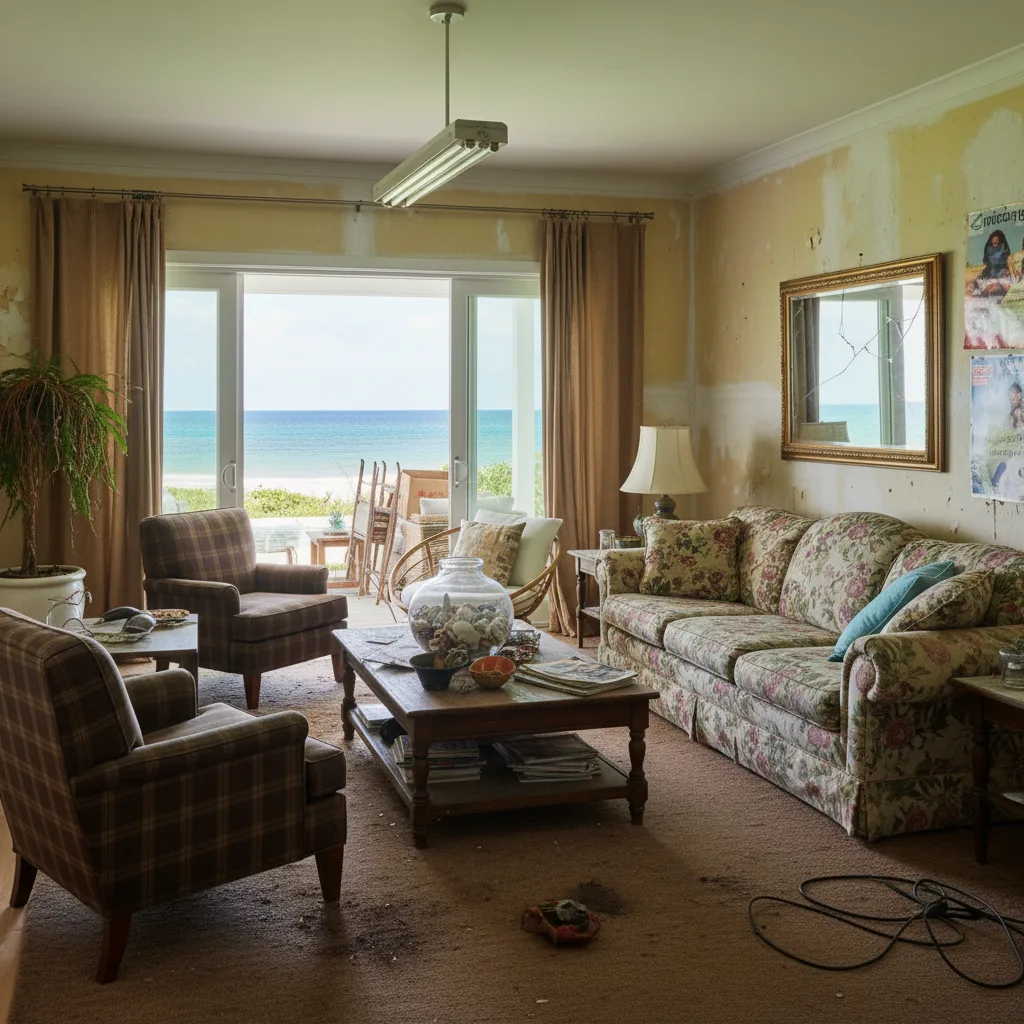
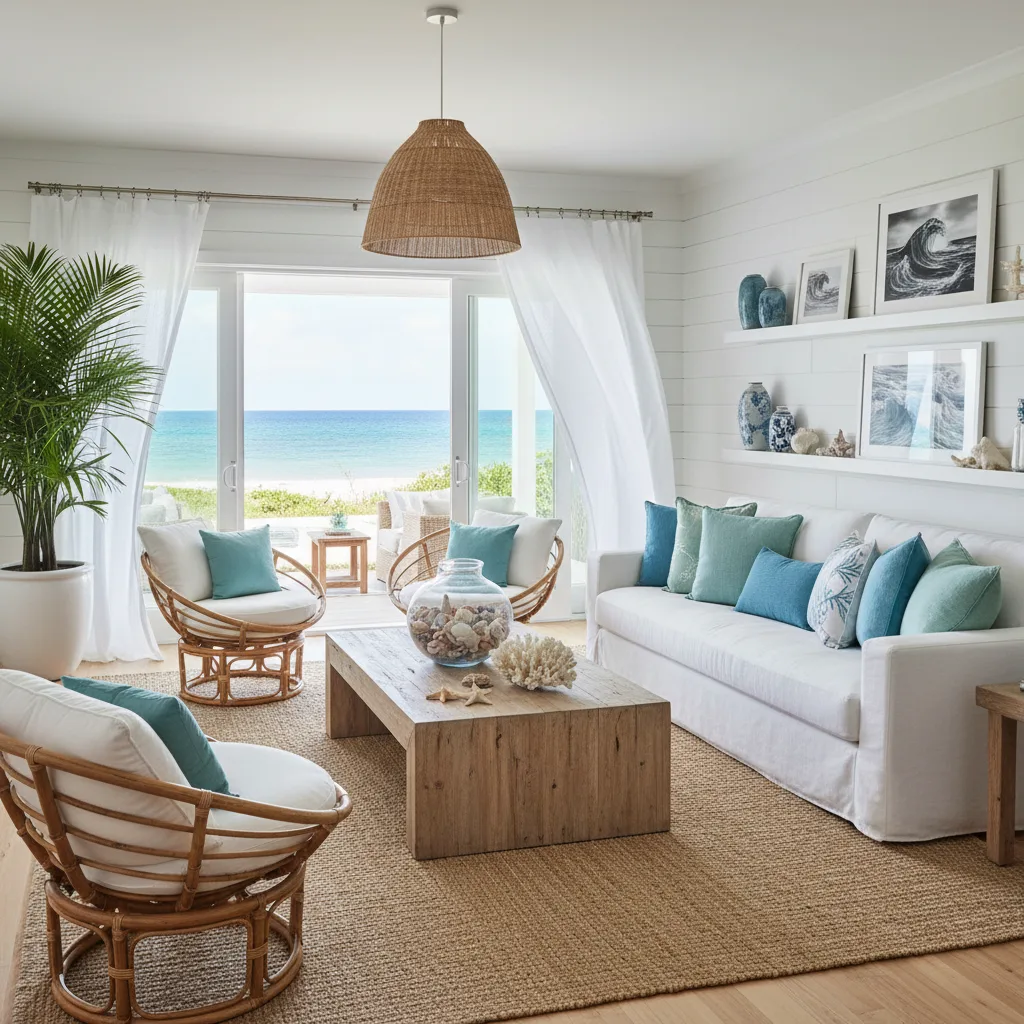
Pourquoi les locataires ont plus besoin de visualisation que quiconque
Quand on est propriétaire de son logement, une mauvaise décision de design coûte cher mais reste réversible. On peut repeindre. On peut changer les luminaires. On peut rénover. Cela coûte du temps et de l'argent, mais l'option existe. Quand on est locataire, les erreurs sur le mobilier sont plus définitives — ou en tout cas plus douloureuses financièrement. Le canapé à 900 $ qui ne rentre pas dans la pièce. Le tapis qui jure avec un sol qu'on ne peut pas changer. Les rideaux qui donnent l'impression de rétrécir la pièce. Ces erreurs arrivent parce que les locataires essaient de visualiser des changements dans un espace aux contraintes fixes qu'ils ne peuvent pas modifier, en s'appuyant uniquement sur leur imagination.
La visualisation par IA supprime le besoin d'imagination. Vous photographiez votre location telle qu'elle est, avec les murs et le sol que vous ne pouvez pas changer, et vous voyez exactement à quoi ressemblerait telle ou telle direction. L'IA travaille avec les contraintes de votre espace réel, elle ne les remplace pas. C'est précisément là sa valeur pour un locataire : vous voyez ce qui est réellement possible, pas ce qui le serait si vous pouviez rénover.
Le locataire moyen dépense 2 400 $ en meubles et décoration durant sa première année dans un logement. La visualisation par IA avec Revamp AI, elle, est gratuite à télécharger, avec 3 crédits gratuits à vie et un essai gratuit de 3 jours, et réduit le risque d'erreurs coûteuses avant le moindre achat.
Ce que l'IA peut et ne peut pas changer dans une location
Comprendre cette limite est ce qui rend la visualisation par IA vraiment utile plutôt que trompeuse. Voici le bilan honnête.
- Ce que l'IA peut montrer : une autre disposition du mobilier, d'autres styles de canapé et de fauteuils, d'autres couleurs et motifs de tapis, d'autres rideaux et habillages de fenêtre, un autre éclairage (lampadaires, lampes de table, suspensions), d'autres plantes et objets déco, d'autres œuvres et décorations murales (pièces accrochées, pas de murs repeints)
- Ce que l'IA ne peut pas changer : la couleur ou la peinture des murs (dans le rendu, les murs correspondent à votre photo), le revêtement de sol, les meubles de cuisine, le carrelage de salle de bains, les éléments encastrés, la hauteur sous plafond, la taille et l'emplacement des fenêtres, l'agencement structurel
- Ce que ça implique concrètement : si votre location a une moquette beige que vous ne pouvez pas retirer, l'IA vous montrera des styles de mobilier sur cette même moquette beige. C'est en réalité un atout — ça vous indique quelles couleurs de meubles fonctionnent avec votre sol réel, pas avec un sol hypothétique.
Les stratégies de design compatibles avec la location qui fonctionnent le mieux avec l'IA
Certaines approches de design donnent de meilleurs résultats dans un logement loué, car elles composent avec les contraintes fixes au lieu de lutter contre elles. Ce sont les stratégies auxquelles la plupart des locataires arrivent après des essais et des erreurs — l'IA vous permet de sauter cette étape.
De grands tapis pour ancrer l'espace
Le tapis est, à lui seul, l'achat le plus impactant pour un locataire dans la plupart des salons et chambres. Il délimite le coin salon, apporte couleur et motif à un sol neutre, et change la perception de l'échelle de la pièce. L'erreur la plus fréquente : le choisir trop petit — un tapis qui ne passe pas sous les pieds avant du canapé donne une impression de pièce décousue. La visualisation par IA est particulièrement utile ici : elle vous montre la taille proportionnellement correcte pour votre pièce précise, pas une recommandation générique.
Des rideaux qui dépassent le cadre de la fenêtre
Accrocher les rideaux du plafond au sol — et prolonger la tringle de 15 à 30 cm au-delà du cadre de la fenêtre de chaque côté — donne l'impression de fenêtres plus grandes et de plafonds plus hauts. C'est l'une des techniques les plus transformantes accessibles à un locataire, pour moins de 100 $ dans la plupart des cas. Les rendus IA vous montrent cet effet sur votre fenêtre réelle avant même d'acheter la tringle.
Du mobilier assorti à la palette fixe de votre location
La plupart des locations ont une palette fixe neutre : murs blancs ou beiges, parquet clair ou moquette beige, meubles de cuisine blancs. C'est en réalité un avantage — des éléments fixes neutres ne jurent avec presque aucun choix de mobilier. L'IA vous montrera quelles couleurs et quels styles de meubles fonctionnent le mieux avec votre combinaison précise, qui varie plus qu'on ne le pense selon les sous-tons des murs et du sol.
L'éclairage comme principal marqueur de style
L'éclairage d'une location est généralement fonctionnel et esthétiquement oubliable : un spot au plafond ou un plafonnier basique. Les lampadaires, lampes de table et suspensions à brancher (qui ne demandent aucune installation et ne laissent aucun trou) permettent de changer complètement la qualité de lumière et la signature stylistique d'une pièce sans planter le moindre clou. Un lampadaire façon Arco évoque le mid-century modern. Une suspension en rotin évoque le style Côtier. Un lampadaire noir épuré évoque l'Industriel. Tout cela est autorisé en location et parfaitement visible sur un rendu IA.
Quels styles fonctionnent le mieux dans un logement loué
Certains styles de design sont plus difficiles à réaliser en location que d'autres, tout simplement parce qu'ils s'appuient davantage sur des éléments architecturaux et des finitions fixes. Les styles qui fonctionnent le mieux, systématiquement, sont ceux portés par le mobilier et les textiles plutôt que par le bâti.
- Scandinave : bois clair, textiles blancs ou avoine, lignes épurées — s'accorde parfaitement avec les murs et sols clairs d'une location classique. Aucun élément architectural requis.
- Japandi : mobilier minimal, neutres chauds, matières naturelles — son esthétique repose sur la sobriété et la qualité des matériaux, deux éléments entièrement maîtrisables en location.
- Côtier : fibres naturelles, superposition de tons bleu-blanc-sable, touches de rotin — son effet repose sur les textiles, les plantes et les œuvres murales. Aucune vue sur l'océan requise.
- Bohème : repose par nature sur la superposition — tapis, plaids, coussins, plantes, œuvres murales — ce qui veut dire que presque tout y est autorisé en location. Le style le plus flexible pour un locataire.
- Mid-century modern : mobilier affirmé, pieds apparents, tons de bois chauds — tout repose sur les pièces, pas sur l'architecture. Fonctionne dans presque n'importe quelle configuration de location.
- Industriel : plus difficile dans une location standard car il s'appuie sur du béton brut, de la brique et des tuyaux apparents. Plus adapté aux locations de type loft où ces éléments existent déjà.
Comment obtenir les meilleurs résultats IA dans une location
Quelques spécificités s'appliquent à la photo d'une location, différentes de celles d'un logement dont on est propriétaire.
- Dégagez la pièce autant que possible. Le mobilier du propriétaire, les piles de cartons et les objets laissés par les précédents locataires perturbent l'IA et encombrent le résultat. Retirez ou sortez du cadre tout ce que vous ne garderiez pas dans le design final.
- Photographiez depuis l'embrasure de la porte ou un coin, jamais depuis le milieu de la pièce. Vous voulez capturer un maximum de mur, de sol et de plafond. Plus l'IA dispose de contexte structurel, plus elle applique le style avec précision à la géométrie propre de votre pièce.
- Photographiez en lumière du jour, plafonnier éteint. Les appartements loués ont souvent un éclairage plafonnier peu flatteur qui fausse la couleur de tout ce qui est dans la photo. La lumière naturelle donne à l'IA des couleurs de mur et de sol fidèles.
- Testez la même pièce sur au moins trois styles. Votre première réaction face à un style dans votre location précise est presque toujours de la surprise, pas un vrai jugement. Le style qui semble raté au premier coup d'œil devient souvent le gagnant une fois l'ensemble passé en revue.
- Faites une capture d'écran de chaque résultat. Les outils IA n'enregistrent pas automatiquement les rendus. Avant de passer au style suivant, capturez celui que vous venez de générer.
Utiliser l'IA avant votre emménagement
L'une des applications les plus précieuses et les plus sous-utilisées : photographier un appartement avant de signer le bail — ou juste après avoir eu les clés, mais avant d'emménager — et le passer par la visualisation IA. Une pièce vide est en réalité l'entrée idéale. Aucun mobilier existant ne vient distraire l'IA, et vous voyez exactement à quoi ressemblerait chaque style dans l'espace brut.
Vous obtenez ainsi un plan mobilier avant même de déplacer le moindre carton. Vous voyez si la pièce appelle un canapé d'angle ou une combinaison canapé-causeuse, si l'éclairage a besoin d'être complété, et quelle taille de tapis ancrerait correctement l'espace. Tout cela avant de vous engager sur un achat ou un délai de livraison.
Un appartement vide est la meilleure entrée que vous puissiez donner à un outil de design IA. Si vous pouvez photographier avant l'arrivée de vos meubles, faites-le : le résultat sera l'aperçu le plus fidèle de l'espace fini.
Convaincre un propriétaire avec des rendus IA
Certaines modifications techniquement autorisées pour un locataire — papier peint repositionnable, carrelage adhésif pour la crédence de cuisine, panneaux muraux temporaires — restent soumises à l'accord du propriétaire dans beaucoup de baux. Les rendus IA facilitent nettement ces conversations. Plutôt que de décrire ce que vous voulez faire avec des mots en espérant que le propriétaire arrive à se le représenter, vous lui montrez un rendu photoréaliste de son appartement précis avec le changement proposé déjà appliqué.
Un propriétaire sceptique face à « du papier peint repositionnable dans la chambre » peut se montrer parfaitement à l'aise avec l'idée une fois qu'il la voit dans son propre bien. Le rendu montre le résultat fini, pas le processus — ce qui est presque toujours l'image la moins inquiétante.
Pourquoi la visualisation IA a tout son sens quand on déménage avec un budget serré
Déménager coûte cher. Premier mois, dernier mois, dépôt de garantie, déménageurs, nouveaux équipements — les frais s'accumulent vite. Le budget mobilier qui reste après un déménagement est presque toujours plus serré que prévu, ce qui rend chaque achat plus lourd de conséquences. Se tromper de canapé, quand on n'a pas les moyens d'en racheter un, c'est une erreur de design qui dure deux à trois ans.
La visualisation par IA est la plus précieuse justement quand l'enjeu est le plus élevé. Si vous meublez une nouvelle location avec un budget serré, les 3 crédits gratuits à vie de Revamp AI (et son essai gratuit de 3 jours) suffisent pour tester la décision la plus importante (le duo canapé-tapis) sur les directions de style les plus courantes, avant de dépenser quoi que ce soit. Bien choisir ne coûte rien. Se tromper, au niveau de budget qui suit un déménagement, coûte cher.
Essayez gratuitement avec Revamp AI
À lire aussi : Le guide complet du design d'intérieur par IA · IA pour les petits espaces · Relooking IA de salon · Design IA de chambre · Guide des styles de design d'intérieur
Questions courantes
Foire aux questions
Oui — et à certains égards, ils fonctionnent même mieux pour les locataires que pour les propriétaires. Les contraintes d'une location (murs, sols et meubles de cuisine fixes) correspondent exactement à ce que la visualisation IA préserve par nature — elle ne change que le mobilier, les textiles et la décoration. Le résultat vous montre précisément ce qui est réalisable dans le cadre de votre bail. Vous voyez votre pièce réelle avec de nouveaux meubles, pas une rénovation fantasmée.
Les styles portés par le mobilier et les textiles plutôt que par le bâti fonctionnent le mieux en location : Scandinave, Japandi, Côtier, Bohème et Mid-century modern obtiennent tous leur signature visuelle principalement grâce au mobilier, aux tapis, aux rideaux et à l'éclairage — tous autorisés en location. L'Industriel et les styles qui s'appuient sur des éléments architecturaux apparents (brique, béton, menuiseries sur mesure) sont plus difficiles à réaliser sans que ces éléments soient déjà présents.
C'est en réalité le cas d'usage idéal. Photographiez votre pièce telle quelle, murs non modifiables compris. L'IA applique les styles à votre espace réel — même couleur de mur, même sol — vous voyez donc à quoi ressemble chaque style dans les contraintes précises de votre location. Vous pouvez ensuite identifier quelle direction de mobilier et de décoration fonctionne le mieux avec les éléments fixes, et acheter en conséquence. Le rendu vous montre ce qui est réalisable, pas ce qui nécessiterait une rénovation.
L'approche la plus économique : (1) identifiez la bonne direction avec l'IA avant d'acheter quoi que ce soit — Revamp AI est gratuit à télécharger, avec 3 crédits gratuits à vie et un essai gratuit de 3 jours, largement de quoi éviter des erreurs coûteuses sans rien dépenser ; (2) priorisez le tapis, les rideaux et l'éclairage, les trois achats les plus impactants pour un locataire ; (3) achetez le canapé en dernier, une fois que vous avez vu comment il s'intègre à l'espace dans plusieurs directions de style. La plus grosse erreur de décoration d'un locataire, c'est d'acheter le canapé en premier, ce qui oblige ensuite toutes les autres décisions à s'organiser autour de lui.
Oui. Un rendu photoréaliste de votre appartement précis avec le changement proposé déjà appliqué — papier peint repositionnable, carrelage adhésif pour la crédence, panneaux muraux temporaires — est bien plus convaincant qu'une description à l'oral. Le propriétaire voit le résultat fini dans son propre bien, pas un avant-après générique tiré d'un blog déco. La plupart des propriétaires sceptiques face à une demande de modification se montrent plus ouverts une fois qu'ils voient exactement à quoi ressemble le résultat final.