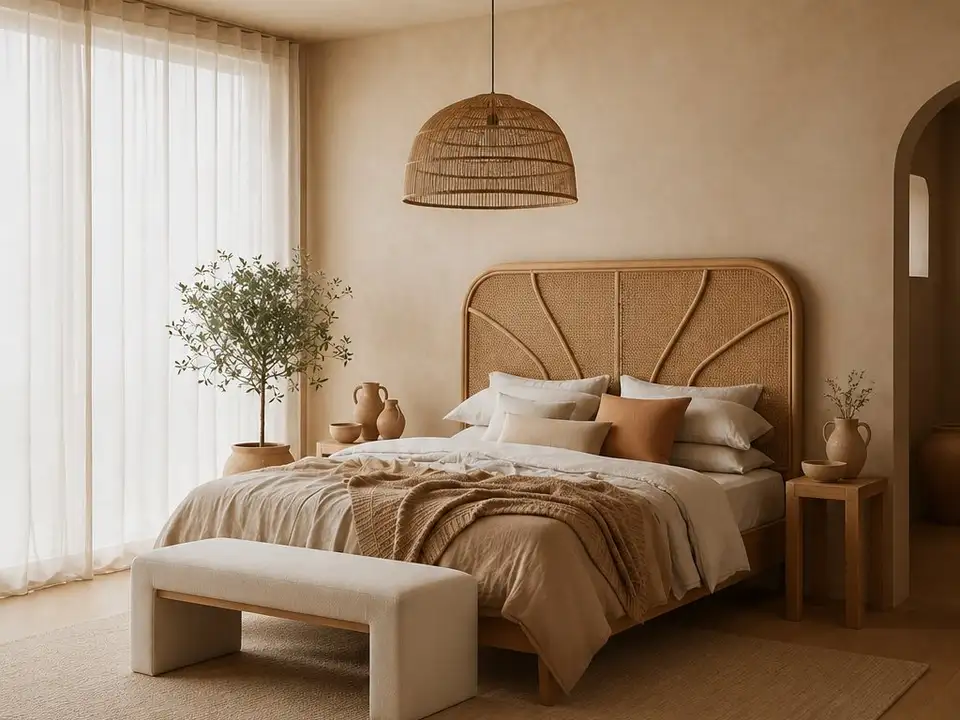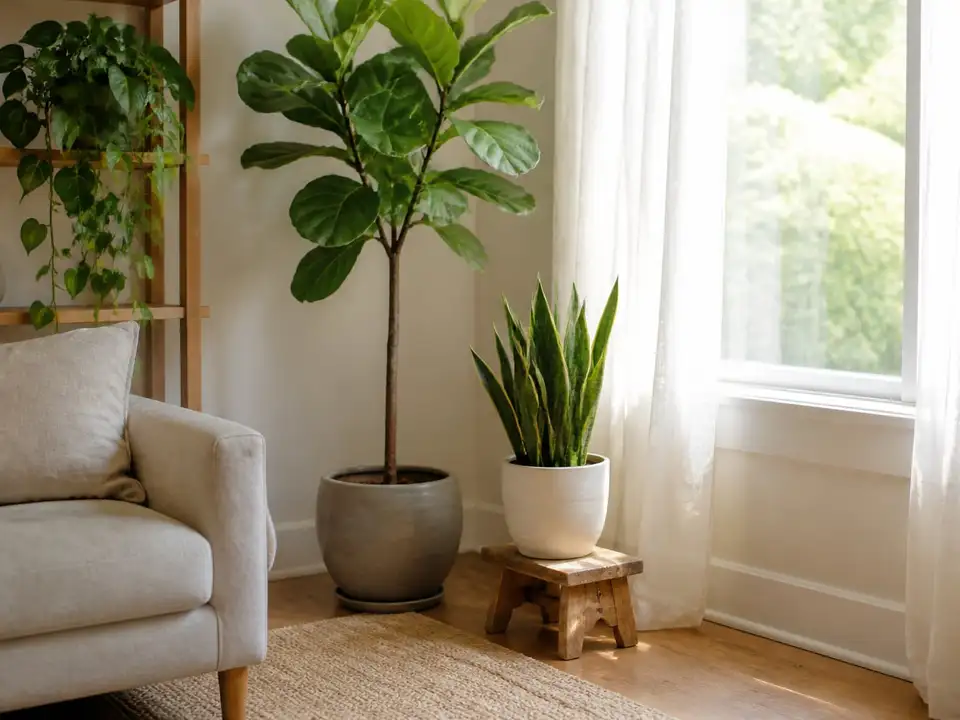
Why does my room feel unfinished or off even though it is clean?
Clean is not the same as resolved. A tidy room can still feel off when the proportions, light, or arrangement send mixed signals. The eye notices a problem long before you can name it.
This post is a diagnostic, not an opinion piece. You will take one photo, check it against twelve common causes, and pick one or two fixes to try tonight. Everything here uses things you already own, plus rearranging.
How do I set up the photo for the checklist?
Stand in a doorway or corner, hold the phone at chest height, and shoot the whole room with the lights you normally use. Do it once in daylight and once in the evening, because many problems only show up at night.
Look at the photo, not the room. A photo flattens depth and removes the habit-blindness you have from living there, so crowding, empty walls, and clutter stand out. For tips on getting a photo that works well for analysis, see how to photograph a room for an AI redesign.
Do not tidy before you shoot. The point is to see what your eye is already reacting to.
What is the 15-minute checklist to find what is wrong?
Work down the numbered list and write a yes or no beside each item. Spend about a minute and a half per item. Stop when you have two or three yeses; those are your priorities.
- Furniture scale. Is one piece much bigger or smaller than its neighbours, or too big for the wall behind it?
- Spacing and walkways. Can two people pass without turning sideways, and is anything pushed hard against a wall for no reason?
- Rug sise. Does the rug look like a doormat floating in the middle, with furniture sitting entirely off it?
- Lighting layers. Is there only one overhead source, or are lamps at different heights?
- Colour temperature. Do the bulbs look like a mix of yellow and blue-white?
- Visual weight. Is all the dark or heavy stuff on one side of the photo?
- Wall art. Is art floating high above furniture, or tiny against a big wall?
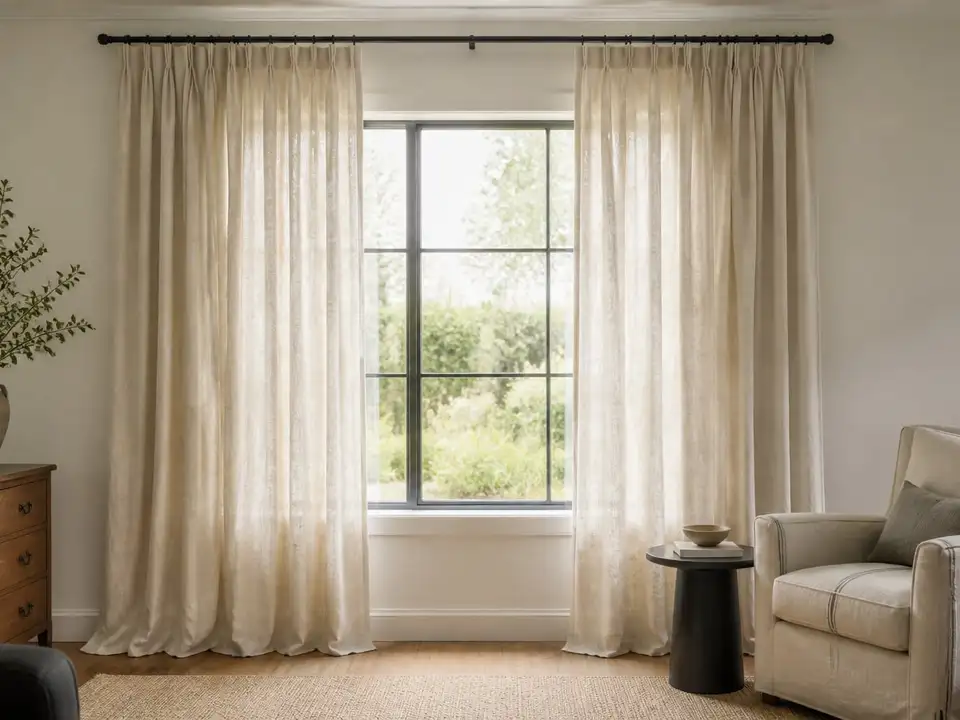
- Curtains. Do they stop at the window frame, or hang from just above it?
- Palette and contrast. Is everything the same mid-tone, or are there too many unrelated colours?
- Clutter zones. Are there surfaces where many small objects compete?
- Focal point. Where does your eye land first, and is it something you chose?
Cord and surface mess is the twelfth thing worth a glance: tangled cables, a bare TV stand with chargers, or a counter covered in mail. It is covered in the table below with clutter.
What does each problem look like, and what can I try tonight?
Match what you notice in the photo to the likely cause, then try the fix. Every fix below uses furniture, lamps, and objects you already have.
| What you notice | Likely cause | Try tonight |
|---|---|---|
| A sofa swallows the room, or a tiny chair looks lost | Furniture scale mismatch | Swap the smallest and largest pieces between rooms, or add a mid-sise piece beside the small one so the sises step down gradually |
| Everything feels crammed, or pieces are stranded far apart | Poor spacing and walkways | Pull seating a little off the walls toward a shared centre, and clear a straight, comfortable path through the main route |
| The seating area looks like it floats on the floor | Rug too small | Move the rug so at least the front legs of the main seating sit on it, or borrow a larger rug from another room to test |
| The room looks flat and dull at night | One light source | Add at least one lamp at table height and one low light in a corner, so light comes from several heights |
| The room looks patchy, some areas yellow and some blue-white | Mixed bulb colours | Put matching warm bulbs in the lamps you use most in the evening, and keep the same colour across a room |
| The photo tilts to one side, as if heavy on the left | Unbalanced visual weight | Move a dark, tall, or large item toward the lighter side, or add a plant or lamp there to even it out |
| Art sits near the ceiling or looks like a postage stamp | Art too high or too small | Lower art so it relates to the furniture below it, and group small pieces together so they read as one larger piece |
| The window looks short and the ceiling feels low | Curtains hung at the frame | Move the rod up toward the ceiling and let the panels reach near the floor, or temporarily hang them higher with removable hooks |
| Nothing stands out, or too many colours fight | Weak palette and contrast | Pick two or three main colours, pull out what does not belong, and repeat each colour at least twice around the room |
| Shelves and tables look busy | Clutter zones | Clear a surface fully, then put back only a few items, grouped by sise or theme, with space around them |
| Cables, chargers, or remotes visible | Cord and surface mess | Bundle cords behind the furniture, put chargers in a tray or drawer, and clear the TV stand down to the essentials |
| Your eye wanders with nowhere to rest | No focal point | Choose one feature, such as the window, fireplace, a bed, or one large piece of art, and angle the main furniture to face it |
Which design rules of thumb are worth trusting?
A few commonly repeated rules are useful as starting points, not laws. Rug guides generally suggest that a seating area's rug should be big enough that at least the front legs of the sofa and chairs rest on it, so the group reads as one unit.
For wall art, the usual guidance is to hang it so its centre sits around eye level and keep it related to the furniture below it, rather than floating high. For curtains, the common advice is to mount the rod higher and wider than the window to make it look larger.
Exact measurements vary by source, room, and ceiling height, so treat any rule as a starting point. Move things, take another photo, and trust the photo over the rule.
In what order should I fix things?
Start with layout and focal point, then rug, then lighting, then walls and curtains, then clutter and cords. Big structural problems make small fixes look wasted, and tidying last means you only tidy once.
Change one thing, then retake the photo from the same spot. If you change five things at once, you will not know which one helped.
How does Room Doctor in the Revamp app diagnose a room from a photo?
Room Doctor reads the actual photo you take and does the checklist work for you. It names what is holding the room back, shows where in the photo the problem is, and suggests fixes to try tonight with what you already own.
Revamp AI starts with a free trial, so you can try Room Doctor on your own room before you subscribe.
It is an AI reading of one photo, so it can miss things you can see in person, such as how a space feels, real measurements, or what the room is used for. It is not a substitute for a designer in a complicated renovation, where structure, plumbing, or budget come into play. Compare its suggestions with your own checklist results. For how that compares in practice, see AI interior design vs an interior designer.
What can a photo not tell me about my room?
A photo cannot show real sises, how light changes through the day, or how the room feels to use, and wide-angle phone lenses make rooms look larger than they are.
- It cannot tell you if a walkway is wide enough; measure and walk it.
- It cannot judge bulb colour exactly; check the bulb packaging.
- It cannot advise on structural, electrical, or plumbing changes.