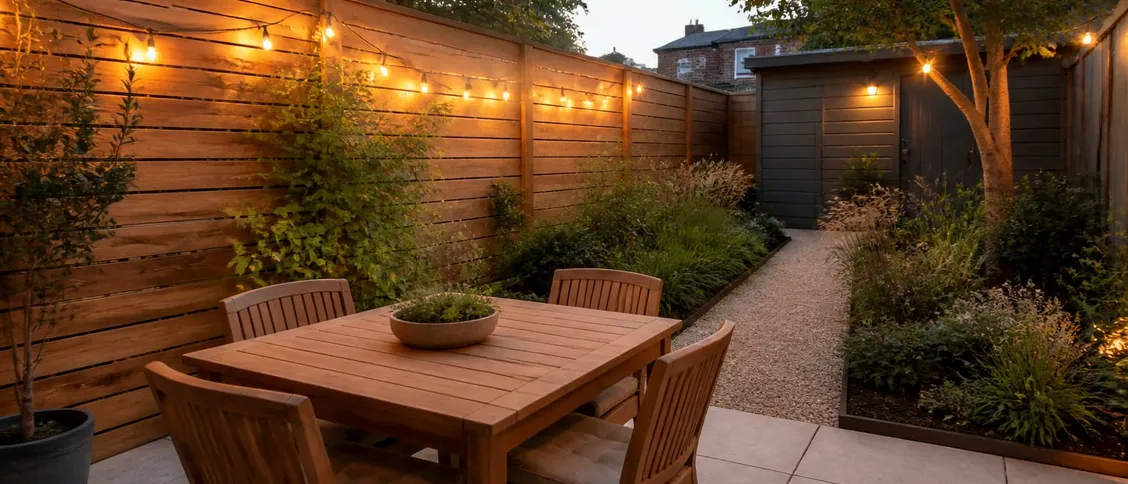
Why does trying to fit everything in backfire?
An average yard does one or two things well. A fire pit, dining table, lawn, raised beds and a shed all fit on paper, and then each is a little too small to use. Sunset's list of layout mistakes warns against placing too many big features and tells you to leave open space.
Plan for a normal Tuesday, not the one party a year. Write down two main uses, such as eating outside and growing vegetables, and give them the best spots. In small yards, Living Etc names oversized furniture as the first mistake: compact or folding pieces leave room to walk.
What should you watch before you draw anything?
Watch sun, wind and water across seasons, because the yard you see in June is not the one you get in January. University of Georgia Extension notes that in winter even a small structure casts a large shadow, and that wind direction shifts with the seasons.
- Sun and shade. Count hours of direct sun in each area. Vegetables want the sunniest corner, a patio often wants afternoon shade.
- Wind. Ask neighbors where the cold winds come from. A dining table in a wind tunnel gets used twice.
- Water. Go out in a heavy rain and see where it pools and where downspouts dump. That puddle is not where the patio goes.
Drainage can damage the house too: Real Homes notes standing water can harm a foundation. The US Department of Energy's Building America guidance says the ground should fall at least 6 inches within the first 10 feet from the house, and patios within 10 feet should slope away at 2 percent. Fixing slope later means lifting the paving.
This is general information. Drainage changes, retaining walls, gas and electrical work need a qualified professional and usually a local permit.
How do you avoid the wrong plants, or too much lawn?
Plant for the size a plant will reach, not the size of the pot. A Bob Vila writer describes butterfly bushes set too close: within two years they had grown into each other and over the daylilies, and two had to be moved. The spacing on the plant tag would have prevented it.
University of Delaware Extension suggests drawing each plant on your plan as a circle at its mature spread. It gives about 20 to 25 feet for tall trees, 5 to 15 feet for small trees and shrubs, and 1 to 5 feet for perennials.
Then check cold tolerance. US readers can use the USDA Plant Hardiness Zone Map (2023 edition), built on the average coldest winter temperature, in 10 degree Fahrenheit zones. Pick perennials, shrubs and trees rated for your zone or colder. Other countries have their own systems. A zone says nothing about summer heat or rain, so a local nursery is still worth asking.
Lawn is the planting people regret on the water bill. EPA WaterSense says outdoor use is more than 30 percent of household water on average, up to 60 percent in arid regions, and that as much as half is lost to wind, evaporation and runoff. It advises turf only where it has a practical function. Where nobody plays, mulched beds or gravel need less water and no mowing.
How big should seating and paths be, and what gets forgotten?
Homemade patios and paths usually come out too small, because an empty space looks generous. Treat these extension guidelines as minimums, since they do not include room to walk past.
| Use | Space to plan for |
|---|---|
| Sitting or eating for 2 | About 25 sq ft |
| Seating for 4 to 8 people | 64 to 100 sq ft (a chair is about 2 by 2 ft) |
| Grill and cooking | About 25 sq ft |
| Two trash or recycling bins | 2.5 by 6 ft |
| Path for more than one person | 3 ft wide or more |
Three things get left out until the first summer. Lighting: Living Etc notes a small yard feels dark and unwelcoming at night, which is when most people use it. Storage: cushions, hoses and bins need a home or they live on the patio. Privacy: you will avoid a seat in full view of the neighbor's window, so plan a screen or hedge there.
What does a backyard design and build cost in 2026?
These US national ranges come from 2026 guides by two lawn care marketplaces, which earn money when you hire through them. They disagree, and LawnStarter's patio figures differ between two of its own pages. Use them to sanity check quotes, not as a budget.
| Item | LawnStarter | Lawn Love |
|---|---|---|
| Landscape design fee | $2,200 to $6,180 (average $4,200) | $1,955 to $7,220 (average $4,590) |
| Landscaping installed, per sq ft | $4.50 to $14.50 | $4.50 to $17 |
| Patio installed, per sq ft | $5 to $40, or $8 to $20 on its design page | $7 to $35 |
| Deck installed, per sq ft | $15 to $55 | About $15 to $50 |
LawnStarter lists $50 to $150 an hour for designers and $65 to $200 for architects. Lawn Love notes design fees exclude installation.
Which backyard mistakes cost the most to undo?
The ones under hard surfaces. A misplaced plant costs a weekend; a misplaced patio costs a patio. The classic is paving before utility and irrigation lines are planned. 811, the US call before you dig service, says to request marks a few business days before any digging.
| Mistake | What it costs you | The fix |
|---|---|---|
| Every feature crammed in | Spaces too small to use | Pick one or two main uses |
| Ignoring sun, shade and wind | A patio nobody sits on | Watch the yard across seasons |
| No drainage or grading plan | Pooling, possible foundation damage | Slope away from the house first |
| Ignoring mature size and zone | Crowded or dead plants | Plan at mature spread, check your zone |
| Seating and paths too small | Chairs off the edge, single file | Plan to the space guidelines |
| No lighting, storage or privacy | Unused evenings, clutter | Plan wiring, storage, screening early |
| Hardscape before utilities | Cutting new paving to run lines | Locate utilities, lay sleeves first |
| Lawn nobody uses | Water bills and mowing | Keep turf where it has a job |
What is the right order to plan a backyard?
Work from the ground up and from permanent to movable. Each step settles something the next depends on.
- Pick one or two main uses and set a budget.
- Measure and draw the yard to scale, with doors, downspouts and trees.
- Map sun, shade, wind and water over as many seasons as you can.
- Locate utilities through 811 or your local equivalent.
- Fix grading and drainage with a professional if water runs toward the house.
- Place the main spaces to the guidelines, joined by paths at least 3 feet wide.
- Plan hidden work: irrigation, sleeves under paths and wiring for lights.
- Build the hardscape: patio, deck, walls, paths.
- Plant to mature spread and your zone, in your area's planting season.
- Add furniture, lights and pots last, since they are easiest to change.
Before step 8 it helps to see options. The Garden design tool in Revamp AI redesigns a garden, patio, terrace or balcony from a photo of the space. It is an AI preview for direction and layout ideas, not a construction plan or a planting plan for your climate. See how to take a photo for an AI redesign.
What if you rent or only have a balcony?
Same logic, smaller, with one extra rule: everything leaves with you. Use containers, interlocking deck tiles, freestanding screens and solar lights. Check your lease first, since some buildings limit weight, grills or anything fixed to railings.
Before buying furniture, tape the layout on the floor: table, chairs pulled out, planters and a route to the door. Live with it for a few evenings. For more, see design ideas for renters.