AI Living Room Redesign: 10 Styles Explained, and How to Finally Choose One Without the Anxiety
You have painted swatches on the wall twice. You have 400 pins across six boards all labeled some version of "living room." And you still cannot say out loud what you actually want. If that is you, the problem is not that you lack taste. It is that every choice feels permanent and expensive, so you freeze. An ai living room redesign finally breaks that loop, because for the first time you can see the result before you commit a single dollar to it. But before we get to the tool, let me give you the thing nobody else will: a clear map of the styles, and an honest way to figure out which one is yours.
Why Redesigning Your Living Room Feels So Hard (It’s Not Just You)
Most people are not bored with their living room. They are scared of choosing wrong again. That fear is rational. The stakes are real money and real regret. A gallon of paint is cheap, but two lost weekends and a color that reads gray-green in your north-facing light are not. A sofa is worse: you spend $2,000 on a piece that looked perfect in the showroom, get it home, and watch it swallow the room whole. Now you are afraid to buy anything.
Add the sheer number of styles, all blurring together after the hundredth photo, and the result is predictable. You scroll, you save, you do nothing. Analysis paralysis is the norm here, not a personal failing.
The trap is simple: every redesign decision has historically been a bet you place before you can see the outcome. AI changes the order. Now you see the outcome first, then decide.
The 10 Living Room Styles, Explained in Plain English
Forget the encyclopedia entries. Here is each style in two sentences, the one detail that makes it unmistakable, and who it actually suits.
- Modern. Clean lines, low-slung furniture, a tight palette of white, black, and one warm wood. Tell: nothing fussy, no clutter, the room reads almost architectural. Suits people who feel calmer when surfaces are clear.
- Scandinavian. Cozy minimalism in pale woods, soft whites, and chunky textiles. Tell: it is bright and warm at the same time, never cold. Suits people who want simple but hate anything that feels sterile.
- Japandi. Scandinavian warmth meets Japanese restraint, in low furniture and muted, earthy tones. Tell: it is even more pared back than Scandi, with darker wood and a quiet, grounded mood. Suits people who find Scandi a touch too cute and want serious calm.
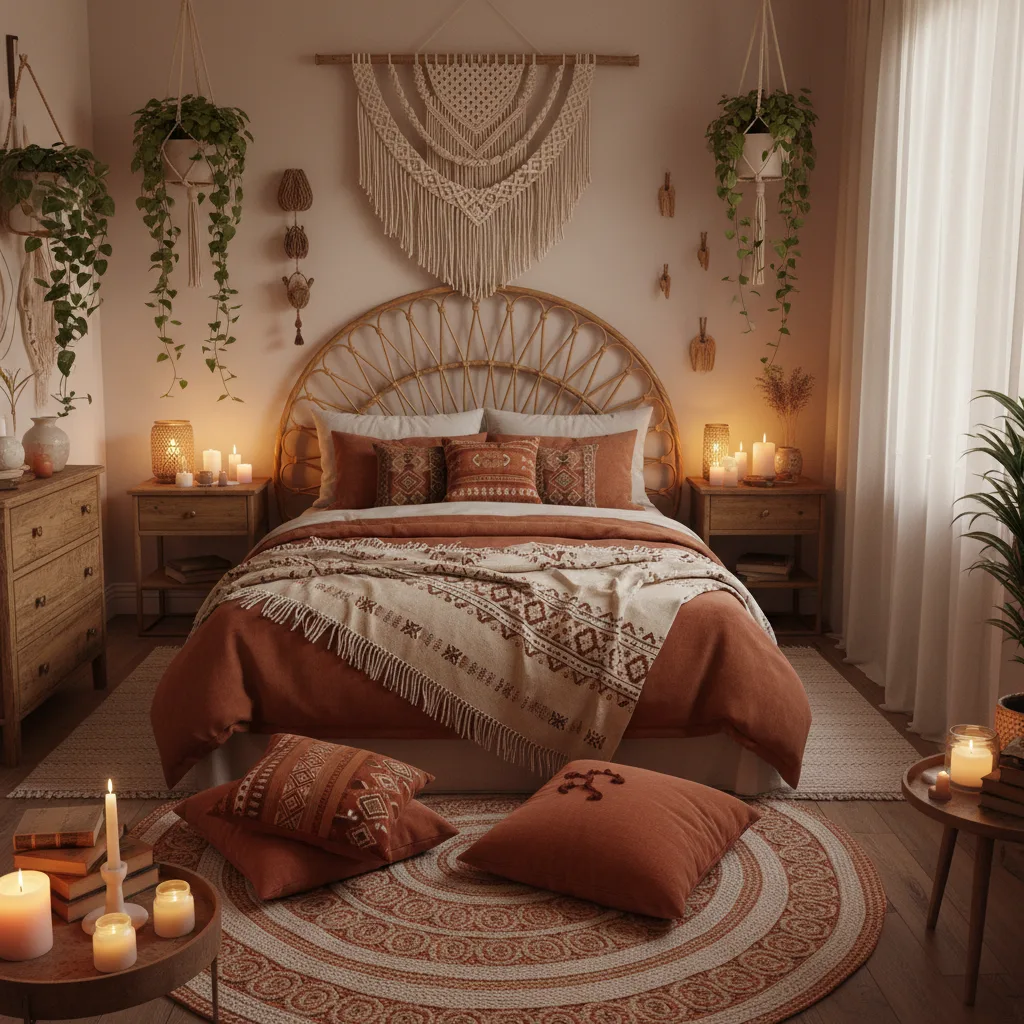
- Bohemian. Layered, collected, and unapologetically full: plants, patterns, rugs on rugs. Tell: it looks gathered over years, never bought in one trip. Suits people whose home is a scrapbook of where they have been.
- Mid-Century Modern. 1950s and 60s lines, tapered legs, warm walnut, a pop of mustard or teal. Tell: every piece looks like it belongs in a design museum. Suits people who like a little retro confidence.
- Modern Farmhouse. Warm, lived-in comfort with shiplap, neutral linens, and black metal accents. Tell: rustic touches kept crisp and current, never cluttered country. Suits people who want cozy without the kitsch.
- Industrial. Exposed brick, metal, leather, and raw wood with an urban-loft attitude. Tell: it celebrates structure instead of hiding it. Suits people drawn to texture and a bit of edge.
- Coastal. Airy and light, with whites, sandy neutrals, blue accents, and natural fibers. Tell: it feels like a deep breath by the water, even far inland. Suits people who want the room to feel like an exhale.
- Maximalist. Bold color, mixed pattern, and curated abundance, on purpose. Tell: more is the point, and it still feels intentional. Suits people who find empty rooms a little lonely.
- Transitional. The middle path: traditional comfort softened by modern simplicity. Tell: you cannot quite name the style, which is exactly the goal. Suits people who want timeless over trendy.

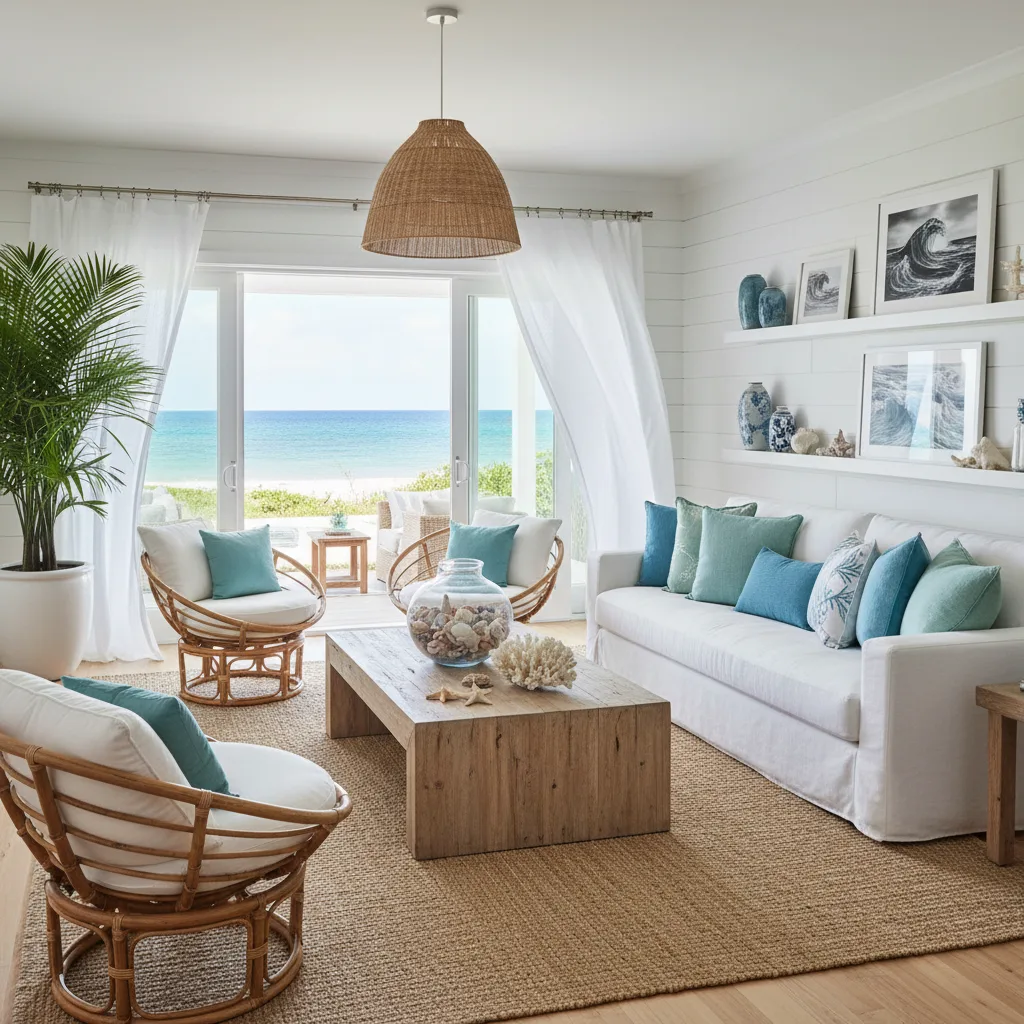
The confusing pairs are worth a beat. Japandi vs. Scandinavian: both love wood and white space, but Scandi is brighter and softer while Japandi is darker, lower, and more austere. Modern vs. Contemporary: Modern is a fixed historical look, contemporary is just whatever is current right now. Farmhouse vs. Coastal: both lean light and natural, but farmhouse is warm and woody while coastal is cool and breezy.
How to Figure Out Which Style Is Actually Yours
Start by protecting your favorites. Before you change anything, name the two or three things in the room you genuinely love: the light through the west window, your grandmother’s armchair, the rug you actually chose well. A good redesign keeps those and builds around them. You are not starting from zero, and pretending you are is how rooms lose their soul.
Then run the lifestyle test. A style that photographs beautifully but fights how you live will always feel wrong. White bouclé and a toddler. A minimalist room and a person who genuinely loves their stuff. Match the style to your daily habits, not to a stranger’s feed.
And give yourself permission to mix. The most satisfying rooms borrow from two or three styles: a mid-century chair, a boho throw, a Japandi sense of space. That is not indecision, it is how real rooms are made. The people who regret their redesign most are usually the ones who committed too hard to a single label.
The Real Cost of Choosing Wrong, and Why It Keeps People Stuck
Let us put numbers on the fear, because the fear is earned. Hiring an interior designer averages around $8,529 per project, and can climb past $25,000. Even a consultation, just to get a professional opinion, runs $50 to $250 an hour. For most people redesigning on a normal budget, that is not an option, which means you are making expensive decisions with no expert in the room.
So the mistakes compound. Wrong paint is cheap to fix but psychologically draining, the third repaint that still is not right. Wrong sofa is expensive and a nightmare to return. After one bad experience, people default to beige and call it taste, when it is really just self-protection. Paralysis is not weakness here. It is a sane response to a genuinely risky situation.
How AI Lets You Try Every Style Before Spending Anything
Here is what actually removes the risk: seeing the result in your room, not a showroom, not someone else’s loft. The workflow is almost dull in its simplicity. Take a photo of your real living room, pick a style, and watch a photorealistic redesign appear in seconds. Same window, same proportions, same awkward corner, restyled.
That last part is the whole point. A mood board cannot account for your specific light, your ceiling height, or the radiator you cannot move. Your room’s quirks change everything, and an ai room redesign built from your own photo respects them. Then you run the loop: cycle the same photo through Modern, Scandinavian, Japandi, Bohemian, all of them, and compare side by side. You decide with evidence instead of imagination.
Revamp AI lets you do exactly this. Snap a photo of your living room, pick any of 10+ styles, and see the redesign in seconds. Free to download.
Try It Free with Revamp AI
Style by Style: What Your Living Room Could Look Like
Say your living room right now is a beige sofa, a builder-white wall, and no clear point of view. Here is what each direction would actually do to it.
- Modern. The clutter goes, the palette tightens to white and walnut, and one clean-lined sofa anchors the space. Your room stays the same size but suddenly reads calm and deliberate. You would buy: a low sofa, a simple media console, one sculptural light.
- Scandinavian. Pale wood, a chunky knit throw, and soft greenery warm that builder-white into something cozy. Same beige base, now layered and inviting. You would buy: a light wood coffee table, textured cushions, a woven rug.
- Bohemian. Layered rugs, trailing plants, and mixed patterns turn the blank wall into a collected, lived-in story. Nothing structural changes, the energy does. You would buy: a patterned rug, a rattan chair, plenty of plants.
- Japandi. The room empties out, the tones go earthy and muted, and a couple of low, intentional pieces do all the talking. The quietest transformation, and often the most calming. You would buy: a low wood bench, ceramic accents, one statement floor lamp.
The 5 Mistakes People Make When Redesigning a Living Room (That AI Helps You Avoid)
- Shopping without a plan. Buying pieces one at a time, each fine on its own, that never cohere into a room. Previewing the whole look first keeps everything pulling in the same direction.
- Copying a trend straight from Pinterest. That viral room had different light, different scale, different bones. On your photo you find out before you buy, not after.
- Committing to one style too rigidly. The all-industrial or all-gray room that feels dated in two years. Testing a mix on your own space shows you where the edges should be.
- Getting the scale wrong. Rugs too small, sofas too big, lamps too short. A visual preview in your actual dimensions catches the mismatch the showroom hides.
- Playing it too safe. Defaulting to beige because the last bold move went sideways. When trying a daring style costs nothing, courage gets a lot cheaper.
None of this requires you to become a designer. It requires you to see before you spend, which until recently was the one thing you could not do. Start with the styles you are drawn to here, protect the things you already love, and let the preview do the worrying for you.
Want to understand how the technology actually produces these renders? Our plain-English guide on how AI room redesign works explains what the model sees when it processes your photo, and where it is honest about its limits.
Further reading: How AI Room Redesign Works · AI Bedroom Design App
Common Questions
Frequently Asked Questions
Take a clear photo of your living room, upload it to an AI design app, and choose a style such as Modern, Scandinavian, or Japandi. The app generates a photorealistic redesign of your actual room in seconds, and you can cycle through different styles on the same photo to compare them side by side before buying anything.
Start by naming the two or three things in the room you already love and want to keep. Then match the style to how you actually live day to day, not just how it photographs. Most satisfying rooms borrow from two or three styles rather than committing rigidly to one label.
Both use natural wood and plenty of light space, but Scandinavian is brighter, softer, and cozier with pale woods and chunky textiles. Japandi is more pared back, with darker wood, lower furniture, and muted earthy tones for a quieter, more grounded mood.
Hiring an interior designer averages around $8,529 per project and can exceed $25,000, with consultations alone running $50 to $250 an hour. Previewing styles with a free AI app first lets you avoid expensive mistakes like the wrong paint or an ill-scaled sofa before you spend.
AI does not replace a designer’s full project management or sourcing, but it solves the part most people actually get stuck on: visualizing a style in their own room before committing. For homeowners who cannot justify a designer’s fee, it provides professional-looking previews at no cost.