AI Interior Design vs. Hiring a Designer: What Each Actually Costs (and What Goes Wrong)
You already know the cost of getting it wrong. Maybe the living room is painted a color you swore was warm taupe on the swatch and reads as hospital beige on the wall. Maybe a sofa is sitting in storage because it arrived two shades darker and a foot wider than the listing photo promised. Or maybe you got a designer quote that made your stomach drop, and now you are stuck between paying it and continuing to live in a room you quietly hate. This is the moment most people start researching AI interior design, and almost every article they find assumes they are calm, decisive, and starting fresh. You are not. So let us talk about what each path actually costs, what genuinely goes wrong, and how to make the next decision the right one.
What Homeowners Actually Spend Before a Single Change Gets Made
Here is the gap nobody names. According to Angi's 2026 cost data, a typical professional designer engagement runs $2,056 to $15,216. But most homeowners budget somewhere between $500 and $2,000 total for a room. That mismatch kills the relationship at the first phone call, before anyone has talked about throw pillows.
And the headline rate is never the real number. The costs comparison articles tend to skip:
- Initial consultation fees of $150 to $500, usually non-refundable, charged just to get a first meeting on the calendar.
- A 10 to 25 percent markup on any furniture sourced through the designer.
- Contractor coordination fees layered on top of everything else.
Then there is the tax most people forget to count: the cost of figuring it out alone. Repainting a room two or three times to land on the right color runs $200 to $500 per attempt in materials, before labor. Returning an oversized or off-tone sofa means a restocking fee of 15 to 30 percent, assuming it is returnable at all. One person paints the same room twice, spends $800, and still hates it. That is the real baseline any solution has to beat, and it is higher than it looks.
A typical designer project costs $2,056 to $15,216 (Angi, 2026). Most homeowners budget $500 to $2,000. That single gap is why most professional engagements never start.
What You Actually Get (and Risk) When You Hire a Professional Designer
A good designer is worth real money, and it is worth being honest about why. You are paying for trade pricing you cannot access, a vetted contractor network, genuine space-planning expertise, building-code awareness, and someone to project-manage the chaos so you do not have to. No AI tool does any of that today.
The timeline, though, is longer than most people expect: roughly 2 to 4 weeks for intake and onboarding, 4 to 8 weeks for design development, and 3 to 12 months for full implementation. Homeowners regularly spend half a year living in a torn-up space waiting for a project to finish.
And the professional tier has its own documented failure modes. One client asked for "warm, traditional, homey" and received a room the designer herself later described as "sterile and commercial," after paying more than $3,000. Another increased their budget by 50 percent at the designer's request, only to watch the recommendations keep climbing past the new ceiling until the project stalled with nothing finished. A third had a light fixture specified that physically could not be installed because of a load-bearing header beam, costing weeks of contractor calls. Hiring a professional reduces certain risks. It does not eliminate them.
What AI Interior Design Actually Does, and What It Cannot
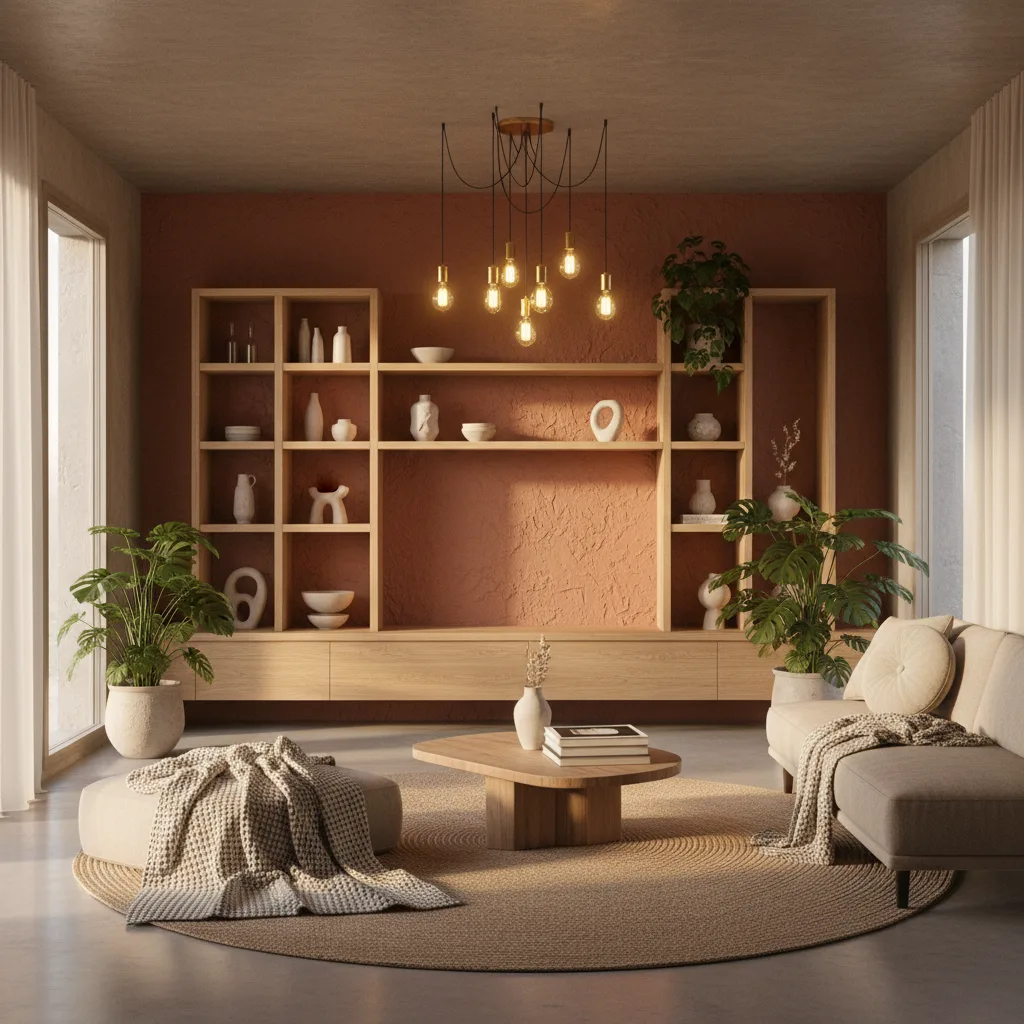
The core workflow takes about a minute. You photograph the room with your phone, choose a style from a menu of ten or more, and get a photorealistic redesign of your actual space before spending a dollar. The point of AI room design is not novelty. It is removing the "I cannot picture it" paralysis that drives the expensive mistakes in the first place.
Where AI is genuinely strong:
- Visualizing color, furniture arrangement, and overall direction before you commit to anything.
- Iterating through ten different style directions in the time a designer spends drafting a contract.
- Letting you test a Coastal, Japandi, or Industrial look in your own room instead of guessing from a Pinterest board.
And the honest limits, which no competitor will tell you: AI cannot navigate structural constraints or building codes. It cannot manage contractors or source furniture at trade pricing. It cannot account for dimensions, sightlines, or load-bearing walls it cannot see in a photo. Treat it as the best visualization and discovery tool ever made, not a general contractor.
If you are curious about the underlying mechanics, our guide on how AI room redesign works walks through exactly what the model sees when it processes your photo.
Try It Free with Revamp AI
Side-by-Side Timeline: 60 Seconds vs. 6 Months
On the AI side: a photorealistic result in 30 to 60 seconds, fast repeat iterations, no intake forms, no scheduling, no waiting for an availability window.
On the designer side: 2 to 4 weeks of intake, 4 to 8 weeks of design development, then 3 to 12 months of implementation. Total elapsed time before the room looks finished frequently passes a full year.
The cost buried in that timeline is the one no comparison article counts. Living in a space you actively dislike for six to twelve months has a real toll. It is the room you apologize for when guests come over, the corner you avoid, the daily small irritation of unfinished work. Speed is not a luxury feature here. For a lot of people it is the whole point.
Five Real Scenarios, and Which Option Makes Sense
- Single room refresh under $3,000: AI wins on cost, speed, and risk. No professional delivers meaningful work at this price point.
- Full renovation with structural changes (moving walls, electrical, plumbing): hire a designer. AI cannot navigate code compliance or coordinate trades.
- You know what you hate but not what you love (the most common case): use AI for free style discovery, then bring an optional designer a finished visual brief.
- Time-sensitive moment (moving in, selling, staging a rental): AI wins outright. A designer quote alone takes longer than your window.
- Luxury project where custom millwork and implementation management are the actual product: a designer is the only viable choice. AI is useful only for early ideation.
The Hybrid Play: Use AI First to Cut Your Designer Bill
This is the most useful and least-discussed move in the whole category. You do not have to choose between AI and a designer. You can use them in order.
Show up to your first consultation with a visual brief already built: three to five AI-generated concepts showing your real room in the styles you actually like. Style alignment, the slowest and most expensive part of early design work, happens before the billable clock even starts. That alone can cut initial billable hours by 40 to 60 percent.
A designer at $200/hour, three hours of early style-discovery meetings: $600. Do that exploration with an AI app first and you keep most of it. Same designer, smaller bill.
Three Questions That Tell You Which Option to Use
- Does this involve moving walls, plumbing, or electrical? If yes, hire a professional. AI cannot help with structural planning or code compliance.
- Do you know what you want, or are you still exploring? If you are still exploring, spend zero dollars until an AI tool narrows your direction. Discovery should be free.
- Can you manage furniture sourcing and contractors yourself? If yes, AI plus self-managed execution covers most cosmetic projects. If no, project management is the real product a designer sells, and it is worth paying for.
The honest answer to "AI or a designer" is usually "both, in the right order." Use AI interior design to figure out what you love and to stop making $500 paint mistakes. Bring in a professional when walls move, codes apply, or someone needs to run the project. Get that sequence right and you spend less, wait less, and end up in a room you actually wanted.
Looking to start with a specific room? Our AI living room redesign guide walks through ten styles on a real room so you can find your direction before spending anything.
Further reading: How AI Room Redesign Works · AI Living Room Redesign Guide
Common Questions
Frequently Asked Questions
Not entirely. AI replaces the visualization and style-discovery work brilliantly and at no cost, but it cannot handle structural changes, building codes, trade-priced sourcing, or contractor management. For cosmetic refreshes you can run yourself, AI is often enough. For renovations that move walls or plumbing, you still need a professional.
A full single-room engagement typically falls within the $2,056 to $15,216 range Angi reported for 2026, plus a non-refundable consultation fee of $150 to $500 and a 10 to 25 percent markup on any furniture sourced through the designer. Most homeowners budget $500 to $2,000 total, which is why many engagements never get past the first call.
For visualizing color, furniture arrangement, and style direction in your actual room, it is genuinely useful and improving fast. It excels at killing the "I cannot picture it" paralysis that leads to expensive paint and furniture mistakes. It is not a substitute for structural planning or project management, so judge it as a discovery and visualization tool, not a contractor.
Use a free AI interior design app to lock your style direction before buying anything, then self-manage the sourcing and execution. The biggest hidden costs in any redesign are do-overs: repainting at $200 to $500 a time and restocking fees of 15 to 30 percent on returned furniture. Visualizing first is what prevents them.